


Quick Specifications
| Purity (%) | 98.9 |
|---|
KPV Peptide — Alpha-MSH-Derived Research Peptide
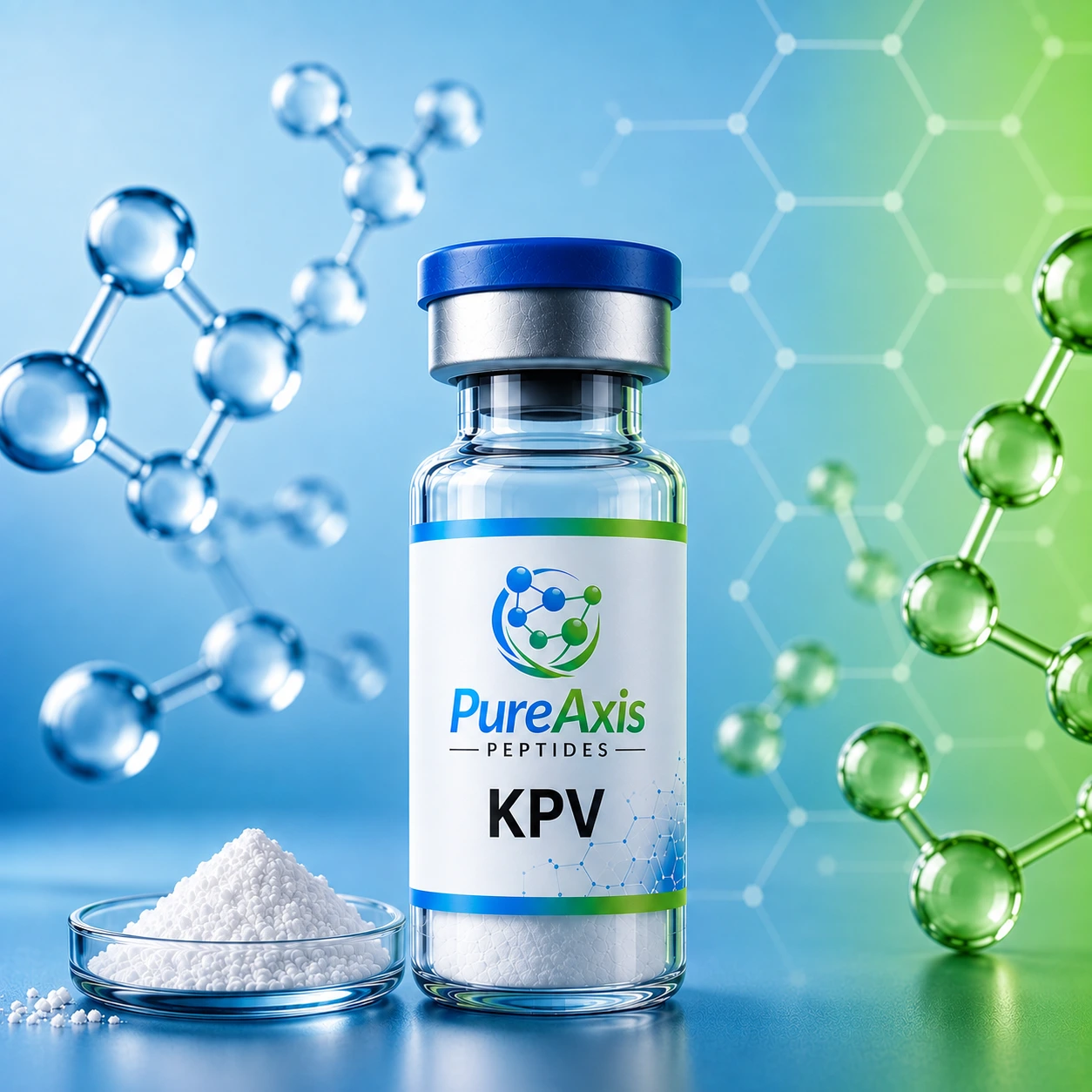
KPV, also known as α-MSH(11–13), is a three-amino-acid peptide derived from the C-terminal sequence of alpha-melanocyte-stimulating hormone (α-MSH). KPV has attracted scientific interest because of its effects in experimental models investigating inflammatory signaling, epithelial biology, intestinal inflammation, and immune responses.
Pure Axis Peptides offers KPV as a research-use peptide for qualified laboratory and scientific investigations.
What Is KPV?
KPV is the C-terminal tripeptide sequence of α-MSH, consisting of lysine-proline-valine. Research has investigated whether this short peptide retains some of the biological properties associated with α-MSH, particularly its effects on inflammatory signaling.
Unlike the larger α-MSH molecule, KPV is a very small tripeptide. Experimental studies have investigated mechanisms that are independent of the classical melanocortin receptor pathway, including peptide transport through PepT1 in intestinal epithelial and immune cells.
KPV Peptide Research
KPV has been investigated across several areas of laboratory research, including:
- Inflammatory signaling
- NF-κB pathway research
- Intestinal epithelial biology
- Gut inflammation research
- Immune-cell signaling
- Skin and epithelial research
- Cytokine signaling
- PepT1-mediated peptide transport
- α-MSH and melanocortin biology
- Cellular stress and inflammatory responses
In experimental intestinal models, researchers have reported that KPV can reduce activation of NF-κB and MAPK signaling pathways and decrease pro-inflammatory cytokine signaling. These findings have been observed in cell-based experiments and animal models and should not be interpreted as evidence of established clinical efficacy in humans.
KPV and NF-κB Signaling
One of the most researched aspects of KPV is its relationship with NF-κB, a transcription factor involved in regulating numerous inflammatory and immune-response genes.
Experimental research in intestinal epithelial cells found that KPV reduced NF-κB activation and inflammatory signaling. Researchers also identified PepT1-mediated uptake as an important component of KPV activity in intestinal epithelial and immune-cell models.
Additional research in human bronchial epithelial-cell models has investigated KPV’s effects on NF-κB signaling, p65 nuclear translocation, and inflammatory chemokine production.
KPV and Intestinal Research
KPV has received particular attention in experimental research involving the gastrointestinal tract.
In mouse models of chemically induced colitis, researchers investigated KPV in relation to inflammatory changes, histological outcomes, and inflammatory markers. These studies provide useful preclinical information about KPV’s potential role as a research tool for studying intestinal inflammatory pathways.
The underlying mechanism is of particular interest because KPV has been reported to enter intestinal epithelial and immune cells through PepT1, rather than relying exclusively on classical melanocortin receptors.
KPV and Skin & Epithelial Research
Because KPV is derived from α-MSH, researchers have also investigated its potential role in epithelial and immune signaling.
Research involving α-MSH-derived peptides has examined NF-κB activation, cytokine expression, immune-cell behavior, and inflammatory signaling in different cell types. KPV has therefore become a useful experimental peptide for investigating the molecular relationship between short melanocortin-derived sequences and inflammatory pathways.
KPV for Laboratory Research
KPV may be relevant to research programs investigating:
Inflammatory Signaling: Studying NF-κB, MAPK, cytokines, and related cellular pathways.
Intestinal Biology: Investigating epithelial-cell signaling, PepT1 transport, and experimental intestinal inflammation.
Immunology: Examining interactions between peptide signaling and immune-cell responses.
Epithelial Research: Studying inflammatory responses in intestinal, respiratory, and other epithelial cell models.
Melanocortin Biology: Investigating the biological properties of α-MSH-derived peptide sequences.
Explore Related Research Peptides
KPV is part of the Pure Axis Peptides Healing Peptides collection and Antimicrobial & Immunology Peptides collection.
Researchers can also explore the broader Peptides collection for additional research materials.
For a wider selection of laboratory compounds, visit the Research Chemicals collection.
Browse Shop All Products to explore the complete Pure Axis Peptides catalog.
Research Use Only
KPV supplied by Pure Axis Peptides is intended strictly for laboratory and scientific research. It is not intended for human consumption, self-administration, diagnosis, treatment, cure, or prevention of any disease or medical condition. Findings from cell and animal studies should not be interpreted as established clinical efficacy or safety in humans. Researchers should evaluate all materials according to their experimental requirements, product documentation, and applicable laboratory procedures.
Internal Linking Recommendations
Primary Internal Links
- Healing Peptides →
/product-category/peptides/healing-peptides/ - Antimicrobial & Immunology Peptides →
/product-category/peptides/antimicrobial-immunology/ - Peptides →
/product-category/peptides/ - Research Chemicals →
/product-category/research-chemicals/ - Shop All Products →
/shop/
Related Product Opportunity
The CSV also contains Klow Blend, which includes KPV alongside TB-500, BPC-157, and GHK-Cu. A relevant internal link between KPV and that blend could strengthen topical relationships between individual peptides and peptide blends.
Klow Blend → /product/klow-blend/
Verify the exact WooCommerce permalink for Klow Blend and the category pages before publishing.
External Scientific References
- PubMed — PepT1-mediated KPV uptake and intestinal inflammation: https://pubmed.ncbi.nlm.nih.gov/18061177/
- PubMed — KPV in experimental inflammatory bowel disease models: https://pubmed.ncbi.nlm.nih.gov/18092346/
- PMC — KPV mechanism and inflammatory signaling: https://pmc.ncbi.nlm.nih.gov/articles/PMC2431115/
- PMC — KPV and NF-κB signaling in bronchial epithelial cells: https://pmc.ncbi.nlm.nih.gov/articles/PMC3403564/
- PubMed — α-MSH and related tripeptides: https://pubmed.ncbi.nlm.nih.gov/18612139/
Product Tags
KPV, KPV Peptide, KPV Research Peptide, KPV Peptide Research, Alpha-MSH, α-MSH, Alpha-MSH 11-13, α-MSH(11-13), Alpha-MSH Derived Peptide, Melanocortin Peptide, Melanocortin Research, NF-KB Research, NF-κB Research, Inflammation Research, Intestinal Research, Gut Research, Epithelial Research, Immune Research, PepT1, Cytokine Research, Healing Peptide, Research Peptide, Laboratory Research
| Purity (%) | 98.9 |
|---|---|
| Lab Tested | yes |
| Research Grade | yes |
| Third Party Tested | yes |
Be the first to review “KPV”
Need Assistance?
Our research specialists are here to help with product selection and technical questions.
Related products

Healing Peptides
Healing Peptides Price range: $41.00 through $68.00Gastric pentadecapeptide for tissue healing research

Antimicrobial & Immunology
Antimicrobial & Immunology Price range: $33.00 through $65.00Copper peptide for skin regeneration and wound healing research

Blends
BlendsBPC-157 5mg + TB-500 5mg Blend
$110.00Dual peptide healing blend for synergistic tissue repair research

Blends
BlendsKlow Blend (TB-500 10mg + BPC-157 10mg + GHK-Cu 50mg + KPV 10mg)
$250.00Klow Blend is a premium quad-peptide formulation combining TB-500 (10mg), BPC-157 (10mg),...
Healing Peptides
Healing Peptides Price range: $49.00 through $176.00Synthetic Thymosin Beta-4 for regeneration and healing research
Antimicrobial & Immunology
Antimicrobial & Immunology $98.00Human cathelicidin antimicrobial peptide for immunology research


 KPV
$70.00
KPV
$70.00
Reviews
There are no reviews yet.