

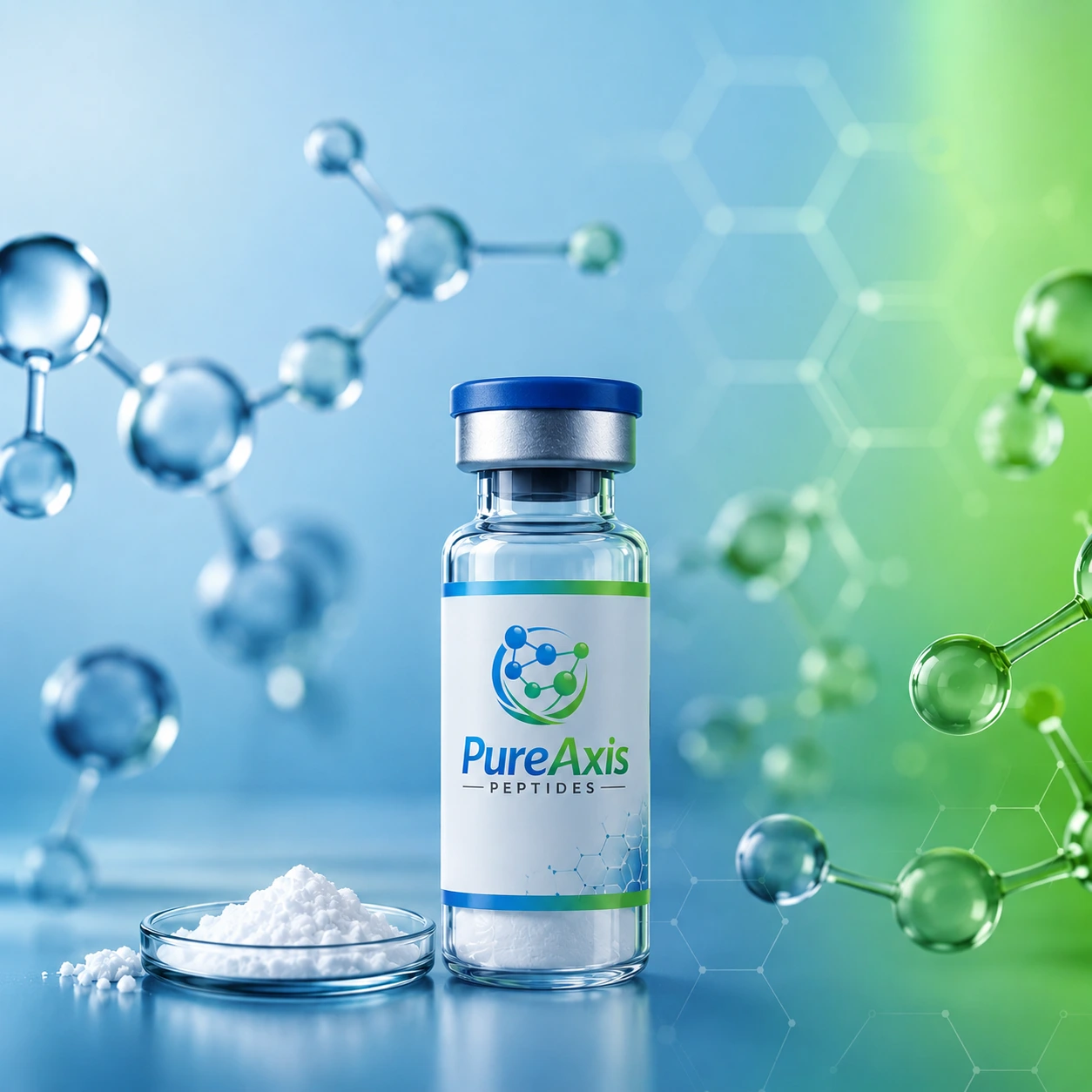


Quick Specifications
| Purity (%) | 98.9 |
|---|
Thymalin — SEO Product Content
SEO Title
Thymalin Peptide | Thymic & Immune System Research Compound
SEO Meta Description
Thymalin research peptide for laboratory studies of thymic biology, immune-cell differentiation, T-cell development, hematopoietic signaling and immunomodulation.
Suggested URL Slug
/product/thymalin/
SEO Product Description
Thymalin Research Peptide
Thymalin is a thymus-derived polypeptide complex investigated for its potential role in immune-system regulation, thymic biology and cellular differentiation.
Unlike defined single-sequence peptides, Thymalin has historically been described as a peptide preparation or polypeptide complex derived from thymic tissue. Experimental research has investigated its effects on immune-cell activity, hematopoietic stem-cell differentiation and thymus-associated signaling.
Pure Axis Peptides offers Thymalin as a research-use material for qualified laboratory and scientific investigations.
What Is Thymalin?
Thymalin is associated with the class of thymic peptide bioregulators investigated extensively in Eastern European research.
Published literature describes Thymalin as a polypeptide complex isolated from the thymus and investigated for effects involving immune-system function. Research has examined interactions between thymic peptides, immune-cell development and neuroendocrine regulation.
The biological complexity of Thymalin is important when interpreting research because the term does not necessarily refer to one single, chemically defined peptide sequence.
Thymalin and Thymic Research
The thymus is a specialized lymphoid organ with an important role in the development and maturation of T lymphocytes.
Thymic research investigates how signals within the thymic environment influence:
- T-cell differentiation
- T-cell maturation
- Immune-cell development
- Hematopoietic progenitor cells
- Immune-system homeostasis
- Thymic epithelial-cell signaling
- Neuroendocrine-immune interactions
Thymalin is studied within this broader field of thymic peptide biology.
Thymalin and Immune-System Research
Experimental research has investigated Thymalin in relation to immune-cell function and differentiation.
A study published in Advances in Gerontology described Thymalin as a thymus-derived polypeptide complex and examined its effects on human hematopoietic stem cells (HSCs). The researchers reported changes in markers associated with HSC differentiation and increased expression of CD28, a marker associated with mature T-cell populations.
These findings provide a research basis for studying Thymalin in models of:
- Hematopoietic differentiation
- T-cell development
- Immune-cell maturation
- Thymic signaling
- Cellular immunology
Thymalin and Hematopoietic Stem-Cell Research
One area of interest is the relationship between thymic peptides and hematopoietic stem and progenitor cells.
Hematopoietic stem cells can differentiate into multiple blood-cell lineages. Research examining Thymalin has investigated whether exposure to thymic peptide preparations influences markers associated with this differentiation process.
The published human-cell study reported reduced expression of CD44 and CD117 alongside increased CD28 expression following Thymalin exposure, findings interpreted by the authors as consistent with stimulation of differentiation toward mature T-cell phenotypes.
These results remain experimental and should be interpreted within the specific cellular model used.
Thymalin and T-Cell Research
T lymphocytes are central components of adaptive immunity.
The thymus provides the specialized environment required for T-cell maturation and selection.
Because Thymalin is derived from thymic tissue, it has been investigated as part of research into the molecular signals associated with T-cell differentiation.
Potential experimental endpoints include:
- CD3 expression
- CD4/CD8 differentiation
- CD28 expression
- T-cell maturation
- Hematopoietic differentiation
- Immune-cell signaling
Thymalin therefore fits naturally into a broader T-cell and thymic biology research category.
Thymalin and Immunomodulation Research
Thymic peptides have historically been investigated as potential immunomodulatory molecules.
Older literature described relationships between thymic peptide levels and immune function, while experimental studies investigated thymic preparations in models of immune dysfunction.
However, “immunomodulation” should not be interpreted as automatically meaning immune enhancement.
Immune regulation is highly context-dependent and can involve both stimulatory and suppressive processes.
For research purposes, Thymalin is better described as a thymic peptide research material than as a generalized “immune booster.”
Thymalin and Thymic Biology
The thymus is closely connected with the development of adaptive immunity.
Thymic epithelial cells and other thymic components produce signaling molecules involved in T-cell maturation.
Research on related thymic peptides has demonstrated links between thymic signaling and the neuroendocrine system. For example, research on the distinct thymic peptide thymulin has shown interactions between thymic and neuroendocrine pathways.
This broader scientific context makes Thymalin relevant to research exploring communication between:
Thymus → immune system → endocrine signaling → cellular differentiation
Thymalin and Cellular Differentiation
Cellular differentiation is an important area of Thymalin research.
The published human hematopoietic stem-cell study investigated whether Thymalin altered expression of cellular markers associated with stem-cell differentiation and T-cell maturation.
This provides a useful experimental framework for examining how thymic peptide preparations may interact with cellular-development pathways.
Researchers may investigate:
- Stem-cell markers
- T-cell markers
- Differentiation pathways
- Cellular maturation
- Immune-cell phenotypes
- Gene-expression changes
Thymalin and Aging Research
Thymic biology has attracted considerable interest in aging research because thymic function changes substantially over the lifespan.
Thymalin and other thymic peptide bioregulators have historically been investigated in relation to age-associated changes in immune function.
Some clinical and experimental publications have reported potential geroprotective effects of thymic peptide preparations, including studies involving older adults.
However, these findings should be interpreted cautiously. The available literature does not justify marketing Thymalin as a proven anti-aging treatment or claiming that it extends human lifespan.
For SEO, “thymic aging research” and “immune aging research” are more scientifically defensible than claims such as “anti-aging peptide.”
Thymalin and Infection Research
Thymalin has also appeared in experimental research involving infectious-disease models.
For example, an older animal study investigated thymic preparations including Thymalin in an experimental Taenia crassiceps infection model.
Another older study examined thymic peptide preparations in experimental influenza infection models.
These studies demonstrate historical scientific interest in thymic peptide preparations and immune responses, but they should not be presented as evidence that Thymalin prevents or treats infections in humans.
Thymalin vs. Thymulin
This distinction deserves its own section because the two names are frequently confused.
Thymalin
- Described as a thymus-derived polypeptide complex/preparation
- Associated with thymic peptide bioregulator research
- Studied in immune-cell differentiation and thymic biology
- May represent a mixture or preparation rather than a single defined peptide
Thymulin
- A distinct thymic hormone
- Described as a zinc-associated nonapeptide
- Produced by thymic epithelial cells
- Studied extensively in T-cell differentiation and neuroendocrine signaling
Therefore, Thymalin and Thymulin should not be presented as synonyms on a product page.
Thymalin Research Applications
Thymalin may be relevant to laboratory studies involving:
Thymic Biology: Investigating peptide signaling associated with the thymus.
T-Cell Research: Studying T-cell differentiation and maturation.
Hematopoietic Research: Investigating stem-cell and progenitor-cell differentiation.
Immunology: Examining immune-cell regulation and thymic signaling.
Cellular Differentiation: Studying changes in cellular phenotype and differentiation markers.
Immune Aging: Investigating relationships between thymic function and age-associated immune changes.
Neuroendocrine Research: Examining interactions between thymic and endocrine signaling.
Peptide Bioregulator Research: Studying naturally derived thymic peptide preparations.
Thymalin Research Material
Because Thymalin can refer to a polypeptide preparation rather than a single defined molecular sequence, product characterization is especially important.
Researchers should verify the current Pure Axis Peptides product specification, material identity, purity or characterization method, source/formulation information, storage requirements and batch-specific certificate of analysis (COA) before laboratory use.
Where a product is represented as a specific synthetic peptide rather than a thymus-derived complex, its identity should be described accurately according to the manufacturer’s analytical documentation.
Explore Related Research
Thymalin fits naturally into a broader thymic, immune and cellular-differentiation research cluster.
Explore the Peptides collection for additional peptide research materials.
If the catalog contains Thymulin, Thymosin Alpha-1, Thymogen or other thymic peptides, these products should be cross-linked to create a dedicated thymic-peptide topical cluster.
Researchers can also browse Research Chemicals for additional laboratory materials.
Visit Shop All Products for the complete Pure Axis Peptides catalog.
Research Use Only
Thymalin supplied by Pure Axis Peptides is intended strictly for laboratory and scientific research. It is not intended for human consumption, self-administration, diagnosis, treatment, cure, or prevention of any disease or medical condition. Research involving Thymalin should not be interpreted as establishing clinical efficacy for immune disorders, infections, aging or other medical conditions. Because Thymalin terminology can refer to a thymus-derived polypeptide preparation rather than a single defined peptide, researchers should verify the identity and characterization of the specific research material before use.
Internal Linking Recommendations
Primary Internal Links
- Peptides →
https://pureaxispeptides.com/product-category/peptides/ - Research Chemicals →
https://pureaxispeptides.com/product-category/research-chemicals/ - Shop All Products →
https://pureaxispeptides.com/shop/
Verify the live WooCommerce URLs before publishing.
Recommended Thymic-Peptide Cluster
If these products exist in the Pure Axis catalog, connect:
- Thymalin
- Thymulin
- Thymosin Alpha-1
- Thymogen
- Other thymic peptides
Recommended internal-link anchors:
- “thymic peptide research”
- “T-cell research”
- “immune-cell differentiation research”
- “thymus research”
- “thymic biology”
- “immunology research peptide”
- “hematopoietic research”
Recommended Site Architecture
Thymalin
→ Thymic biology
→ T-cell differentiation
→ Hematopoietic research
→ Immune aging
→ Thymic peptides
→ Peptides
This creates a topical cluster around thymic and immune-system research rather than relying on generic “immune booster” keywords.
External Scientific References
- PubMed — Thymalin and human hematopoietic stem-cell differentiation:
https://pubmed.ncbi.nlm.nih.gov/33237528/ - PubMed — Thymulin and immunomodulation:
https://pubmed.ncbi.nlm.nih.gov/1418292/ - PubMed — Physiology and therapeutic potential of the distinct thymic peptide thymulin:
https://pubmed.ncbi.nlm.nih.gov/24588820/ - PubMed — Thymulin and the neuroendocrine system:
https://pubmed.ncbi.nlm.nih.gov/15003367/ - PubMed — Thymalin and experimental infection research:
https://pubmed.ncbi.nlm.nih.gov/8067076/ - PubMed — Thymic preparations and experimental infection:
https://pubmed.ncbi.nlm.nih.gov/2488049/ - PubMed — Thymalin and Epithalamin aging research:
https://pubmed.ncbi.nlm.nih.gov/14523363/
Product Tags
Thymalin, Thymalin Peptide, Thymalin Research, Thymalin Research Peptide, Thymalin Peptide Research, Thymic Peptide, Thymic Peptide Research, Thymus Peptide, Thymus Research, Thymic Biology, Immune System Research, Immunology Research, Immunomodulation Research, T Cell Research, T Cell Differentiation, T Cell Maturation, Hematopoietic Stem Cell Research, HSC Research, Cellular Differentiation, Immune Cell Research, Immune Aging, Thymic Aging, Aging Research, Neuroendocrine Research, Peptide Bioregulator, Thymic Bioregulator, Thymic Function, Immune Signaling, Cellular Immunology, Research Peptide, Laboratory Research
| Purity (%) | 98.9 |
|---|---|
| Lab Tested | yes |
| Research Grade | yes |
| Third Party Tested | yes |
Be the first to review “Thymalin”
Need Assistance?
Our research specialists are here to help with product selection and technical questions.
Related products

Antimicrobial & Immunology
Antimicrobial & Immunology Price range: $33.00 through $65.00Copper peptide for skin regeneration and wound healing research

Antimicrobial & Immunology
Antimicrobial & Immunology $190.00VIP (Vasoactive Intestinal Peptide) research peptide for laboratory studies of neuropeptide signaling,...

 Thymalin
$68.00
Thymalin
$68.00
Reviews
There are no reviews yet.