

Quick Specifications
| Purity (%) | 98.9 |
|---|
Oxytocin Acetate — SEO Product Content
SEO Title
Oxytocin Acetate | Oxytocin Receptor & Neuroendocrine Research Peptide
SEO Meta Description
Oxytocin Acetate research peptide for laboratory studies of oxytocin receptor signaling, neuroendocrine biology, social behavior, lactation, reproductive signaling and smooth-muscle research.
Suggested URL Slug
/product/oxytocin-acetate/
SEO Product Description
Oxytocin Acetate Research Peptide
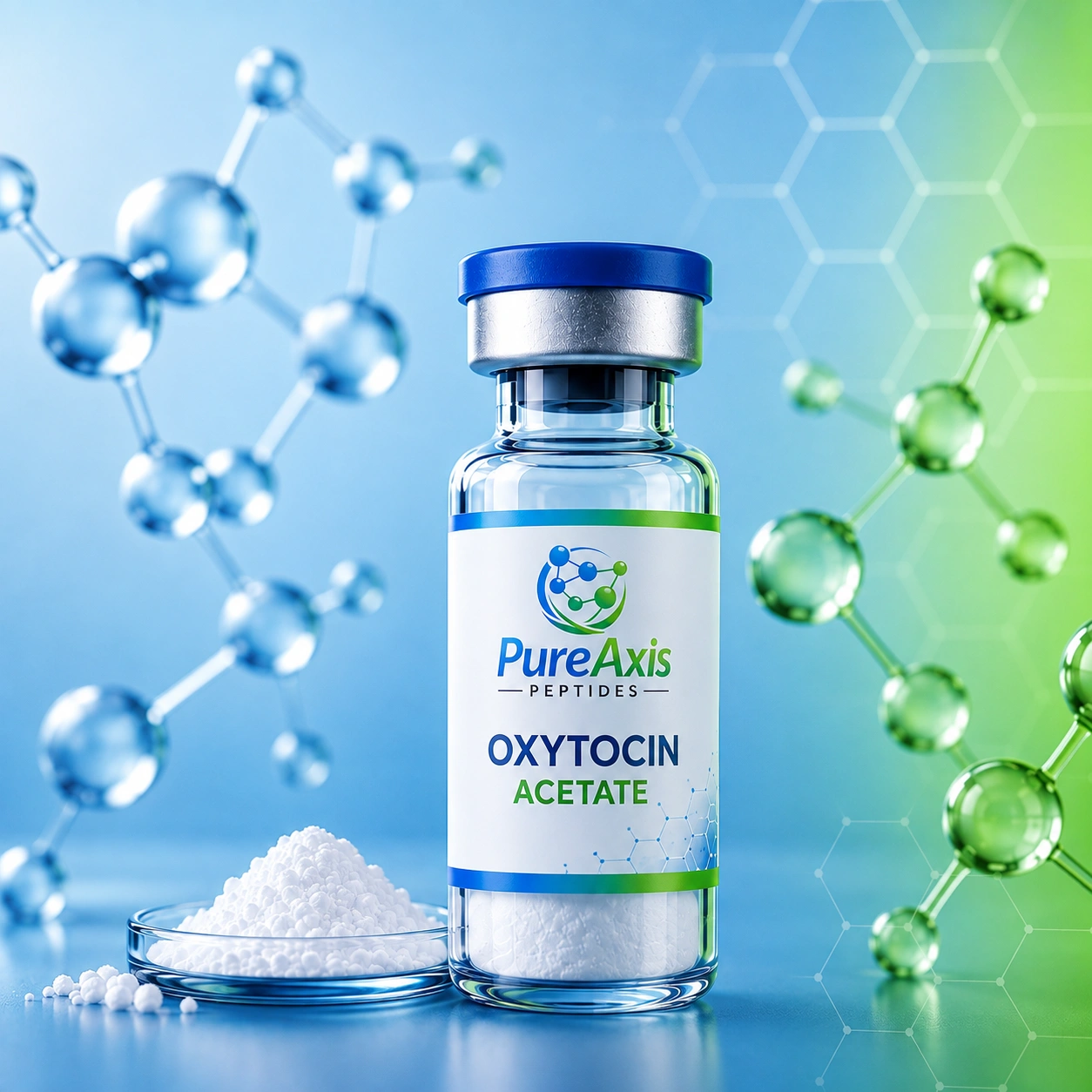
Oxytocin Acetate is the acetate form of oxytocin, a naturally occurring nine-amino-acid neuropeptide hormone involved in reproductive physiology, lactation, smooth-muscle activity and neuroendocrine signaling.
Oxytocin is synthesized primarily by neurons in the hypothalamus and released from the posterior pituitary into the circulation. It acts through the oxytocin receptor (OXTR), a class-A G-protein-coupled receptor expressed in multiple tissues.
Pure Axis Peptides offers Oxytocin Acetate as a research-use peptide for qualified laboratory and scientific investigations.
What Is Oxytocin?
Oxytocin is a cyclic nonapeptide consisting of nine amino acids.
It is one of the best-characterized neuroendocrine peptides and has been studied extensively in:
- Reproductive endocrinology
- Uterine physiology
- Lactation biology
- Neuroendocrine signaling
- Social-behavior research
- Stress-response research
- Neuroscience
- Smooth-muscle physiology
The oxytocin molecule contains a disulfide bond that creates its characteristic cyclic structure, which is important for receptor recognition and biological activity.
Oxytocin and the Oxytocin Receptor
The primary known receptor for oxytocin is the oxytocin receptor (OXTR).
OXTR belongs to the rhodopsin-like/class-A GPCR family. Receptor activation initiates intracellular signaling involving G-protein pathways, phospholipase C, intracellular calcium and protein kinase C.
This makes Oxytocin Acetate a useful research tool for studying:
- GPCR signaling
- Oxytocin receptor activation
- Calcium signaling
- Protein kinase C
- Smooth-muscle contraction
- Neuroendocrine communication
- Receptor desensitization
A simplified pathway is:
Oxytocin → OXTR → G-protein signaling → intracellular Ca²⁺ → cellular response
Oxytocin and Reproductive Endocrinology
Oxytocin has a central role in reproductive physiology.
It is released during processes including childbirth and breastfeeding and acts on specialized tissues expressing OXTR.
Research involving oxytocin can therefore examine:
- Reproductive hormone signaling
- Uterine physiology
- Parturition
- Lactation
- Maternal physiology
- Neuroendocrine regulation
- Hormone-receptor interactions
The relationship between oxytocin concentration, receptor expression and receptor desensitization is an important part of oxytocin biology.
Oxytocin and Uterine Smooth Muscle
One of the most established physiological actions of oxytocin involves uterine smooth-muscle contraction.
During pregnancy and labor, changes in oxytocin receptor expression and signaling contribute to the responsiveness of the myometrium.
Research has investigated how OXTR activation influences intracellular calcium and contraction of uterine smooth muscle.
This makes Oxytocin Acetate relevant to laboratory studies involving:
- Myometrial biology
- Smooth-muscle contraction
- Calcium signaling
- OXTR expression
- Receptor desensitization
- Reproductive physiology
Oxytocin and Lactation Research
Oxytocin is also strongly associated with milk ejection, or the let-down reflex.
During breastfeeding, sensory stimulation activates hypothalamic oxytocin neurons, resulting in oxytocin release and contraction of specialized myoepithelial cells surrounding mammary alveoli.
This provides a useful experimental model for studying:
- Neuroendocrine reflexes
- Mammary-gland physiology
- Myoepithelial-cell contraction
- Oxytocin receptor signaling
- Hormonal control of lactation
Oxytocin and Neuroendocrine Signaling
Oxytocin is produced within the hypothalamus and released both peripherally and within the central nervous system.
The hypothalamic oxytocin system therefore provides an important model for studying communication between the:
Brain → endocrine system → peripheral tissues
Research has examined how oxytocin neurons respond to physiological stimuli such as suckling, parturition and stress.
This makes Oxytocin Acetate particularly relevant to neuroendocrinology research.
Oxytocin and Social Behavior Research
Oxytocin has attracted substantial scientific interest because of its association with social behavior and social cognition.
Experimental research has investigated oxytocin in relation to:
- Social recognition
- Social interaction
- Maternal behavior
- Partner-related behavior
- Social salience
- Emotional processing
- Stress responses
However, the effects of oxytocin on human social behavior are complex and context-dependent.
For SEO purposes, phrases such as “oxytocin social behavior research” and “oxytocin neuroscience research” are more scientifically appropriate than describing oxytocin as a guaranteed “bonding hormone” or “love peptide.”
Oxytocin and Stress Research
The oxytocinergic system has also been investigated in relation to stress physiology and allostatic regulation.
Oxytocin interacts with neural circuits involved in emotional processing and stress responses, making it relevant to experimental studies examining the relationship between neuroendocrine signaling and environmental stress.
Potential research endpoints include:
- Stress-related behavior
- Hypothalamic signaling
- Neuroendocrine responses
- Cortisol-associated pathways
- Social buffering
- Autonomic regulation
Results can vary substantially according to species, experimental context, route of administration and social environment.
Oxytocin and Anxiety Research
Oxytocin has been studied experimentally in anxiety-related models and human research.
However, findings across clinical studies have not established a simple or universally beneficial effect.
Research outcomes can depend on:
- Baseline psychological state
- Social context
- Dose and exposure
- Administration route
- Sex
- Individual receptor biology
- Experimental environment
Therefore, Pure Axis content should describe this as anxiety and stress-response research, rather than marketing Oxytocin Acetate as an established anxiety treatment.
Oxytocin and Social Cognition
Social cognition refers to the processes through which individuals perceive, interpret and respond to other people.
Oxytocin research has examined whether OXTR activation influences aspects of:
- Social attention
- Facial processing
- Social memory
- Emotional interpretation
- Social reward
- Interpersonal behavior
These effects are an active area of neuroscience research and should not be reduced to a single “trust” or “bonding” mechanism.
Oxytocin and Sexual Behavior Research
Oxytocin is involved in several reproductive and social processes, and researchers have investigated its potential relationship with sexual behavior and reproductive physiology.
Experimental studies have explored oxytocin signaling in:
- Sexual behavior
- Pair bonding
- Reproductive behavior
- Genital-tract physiology
- Social reward
The biological role of oxytocin is considerably broader than sexual behavior alone.
Oxytocin and Cardiovascular Research
Oxytocin receptors are expressed in peripheral tissues, and the oxytocin system has been investigated in cardiovascular physiology.
Experimental research has examined relationships between oxytocin and:
- Vascular signaling
- Blood pressure
- Cardiac function
- Autonomic regulation
- Fluid balance
These effects are complex and depend on receptor distribution and physiological context.
Oxytocin and Gastrointestinal Research
More recent research has expanded investigation of the oxytocin/OXTR system into the gastrointestinal tract.
Experimental studies have examined oxytocin signaling in relation to gastrointestinal motility, secretion and inflammatory processes.
This makes the oxytocin system relevant to broader research into:
- Gut-brain signaling
- GI motility
- Enteric neuroendocrinology
- Smooth-muscle physiology
- Neuroimmune communication
Oxytocin Receptor Signaling
OXTR activation can trigger intracellular pathways involving phospholipase C and calcium mobilization.
This provides an experimental model for investigating how a peptide hormone can translate receptor binding into cellular responses.
Potential laboratory endpoints include:
- OXTR expression
- Receptor binding
- Calcium flux
- Phospholipase C activity
- Protein kinase C
- MAPK signaling
- Receptor internalization
- Receptor desensitization
Oxytocin and Receptor Desensitization
Like many GPCR systems, the oxytocin receptor can undergo desensitization and regulatory changes.
Receptor expression can vary according to tissue, hormonal environment and physiological state.
Research into OXTR regulation is therefore important for understanding why oxytocin responses can differ substantially between experimental conditions.
Oxytocin Acetate Research Applications
Oxytocin Acetate may be relevant to laboratory studies involving:
Oxytocin Receptor Research: Investigating OXTR activation and regulation.
GPCR Research: Studying class-A G-protein-coupled receptor signaling.
Neuroendocrinology: Investigating hypothalamic peptide-hormone pathways.
Reproductive Biology: Studying reproductive endocrine signaling.
Uterine Physiology: Investigating myometrial contraction and OXTR signaling.
Lactation Research: Studying milk-ejection physiology and mammary signaling.
Neuroscience: Investigating social behavior and neuropeptide signaling.
Stress Research: Examining interactions between oxytocin and stress-response pathways.
Social Behavior Research: Studying social cognition and interpersonal behavior.
Calcium Signaling: Investigating OXTR-dependent intracellular calcium responses.
Smooth-Muscle Research: Studying peptide-mediated contractile signaling.
Oxytocin Acetate Research Material
Researchers should verify the current Pure Axis Peptides product specification, peptide identity, sequence, salt form, purity, formulation, storage requirements and batch-specific certificate of analysis (COA) before laboratory use.
The acetate designation should be retained in laboratory records and analytical documentation.
Oxytocin is a pharmacologically active hormone, so research material should be handled according to appropriate laboratory procedures.
Oxytocin Acetate vs. Vasopressin
Oxytocin and vasopressin are closely related neurohypophyseal peptide hormones and share substantial structural similarity.
Both are nonapeptides and both interact with GPCR families, but they have different principal physiological roles and receptor systems.
This makes oxytocin/vasopressin comparison a useful research area involving:
- Receptor selectivity
- Ligand structure
- Neuroendocrine signaling
- Fluid balance
- Smooth-muscle biology
- Social behavior
Researchers should not treat the two peptides as interchangeable.
Oxytocin Acetate vs. Other Neuropeptides
Oxytocin fits naturally into a broader neuropeptide research category alongside compounds such as Selank, Semax and other regulatory peptides.
Its distinguishing feature is that it is a naturally occurring neurohypophyseal hormone with a well-characterized receptor system.
Explore Selank for research involving GABAergic and regulatory-neuropeptide signaling.
Oxytocin Acetate and Pharmaceutical Oxytocin
Synthetic oxytocin is also the active ingredient in prescription pharmaceutical products.
For example, the current U.S. DailyMed label identifies Pitocin as a prescription product containing synthetic oxytocin.
A research-grade Oxytocin Acetate product should therefore not be represented as Pitocin or as an FDA-approved pharmaceutical product.
The distinction between a research material and an approved medicinal product should remain clear throughout the product page, metadata and advertising.
Explore Related Research
Oxytocin Acetate fits naturally into a broader neuropeptide, reproductive-endocrinology and neuroendocrine research cluster.
Explore Selank for regulatory-neuropeptide and GABAergic research.
Browse the Peptides collection for additional peptide research materials.
Explore Research Chemicals for additional laboratory materials.
Visit Shop All Products for the complete Pure Axis Peptides catalog.
Research Use Only
Oxytocin Acetate supplied by Pure Axis Peptides is intended strictly for laboratory and scientific research. It is not intended for human consumption, self-administration, diagnosis, treatment, cure, or prevention of any disease or medical condition. Oxytocin is a biologically active neuroendocrine hormone and is also the active ingredient in approved prescription oxytocin products. A research-grade Oxytocin Acetate product should not be represented as an approved pharmaceutical product such as Pitocin. Researchers should evaluate all materials according to their experimental requirements, product documentation and applicable laboratory procedures.
Internal Linking Recommendations
Primary Internal Links
- Selank →
https://pureaxispeptides.com/product/selank/ - Peptides →
https://pureaxispeptides.com/product-category/peptides/ - Research Chemicals →
https://pureaxispeptides.com/product-category/research-chemicals/ - Shop All Products →
https://pureaxispeptides.com/shop/
Verify the exact live WooCommerce URLs before publishing.
Recommended Internal-Link Anchors
Use varied contextual anchors such as:
- “Oxytocin research peptide”
- “oxytocin receptor research”
- “neuropeptide research”
- “neuroendocrine research”
- “reproductive hormone research”
- “social behavior research”
- “G-protein-coupled receptor research”
- “smooth-muscle research”
- “lactation research”
- “neuroendocrinology research”
Recommended Site Architecture
Build a dedicated oxytocin / neuroendocrine topical cluster:
Oxytocin Acetate
→ Oxytocin receptor
→ GPCR signaling
→ Neuroendocrinology
→ Reproductive biology
→ Lactation
→ Social behavior
→ Stress-response research
→ Neuropeptides
This gives the page multiple relevant search pathways while keeping the content scientifically grounded.
External Scientific References
- PubMed — Oxytocin mechanism and receptor signaling in myometrium:
https://pubmed.ncbi.nlm.nih.gov/24888645/ - PubMed — Oxytocin receptor system: structure, function and regulation:
https://pubmed.ncbi.nlm.nih.gov/11274341/ - DailyMed — Current Pitocin (synthetic oxytocin) prescribing information:
https://dailymed.nlm.nih.gov/dailymed/drugInfo.cfm?setid=969d5b35-0add-4c23-9605-6a5b6ab65c95 - FDA — Pitocin prescribing information:
https://www.accessdata.fda.gov/drugsatfda_docs/label/2014/018261s031lbl.pdf
Product Tags
Oxytocin Acetate, Oxytocin, Oxytocin Peptide, Oxytocin Research, Oxytocin Research Peptide, Oxytocin Acetate Research, Oxytocin Receptor, OXTR, OXTR Research, Oxytocin Receptor Research, Neuropeptide, Neuropeptide Research, Neuroendocrine Research, Neuroendocrinology, Reproductive Endocrinology, Reproductive Hormone Research, Social Behavior Research, Social Cognition Research, Stress Research, Lactation Research, Uterine Research, Myometrial Research, Smooth Muscle Research, GPCR Research, G Protein Coupled Receptor, Calcium Signaling, Protein Kinase C Research, Hormone Signaling, Hypothalamic Research, Pituitary Research, Neurobiology Research, Peptide Pharmacology, Laboratory Research
| Purity (%) | 98.9 |
|---|---|
| Lab Tested | yes |
| Research Grade | yes |
| Third Party Tested | yes |
| Strength | 2mg, 5mg |
|---|---|
| Volume | 10 vials |
Be the first to review “Oxytocin Acetate”
Need Assistance?
Our research specialists are here to help with product selection and technical questions.
Related products


Antimicrobial & Immunology
Antimicrobial & Immunology $190.00VIP (Vasoactive Intestinal Peptide) research peptide for laboratory studies of neuropeptide signaling,...

Reproductive & Hormonal
Reproductive & Hormonal Price range: $85.00 through $165.00HCG (Human Chorionic Gonadotropin) is a glycoprotein hormone used extensively in reproductive...
Neuroscience
Neuroscience Price range: $49.00 through $80.00Neuropeptide for cognitive enhancement and neuroprotection research

Neuroscience
Neuroscience Price range: $46.00 through $92.00Delta sleep-inducing peptide for sleep and stress research

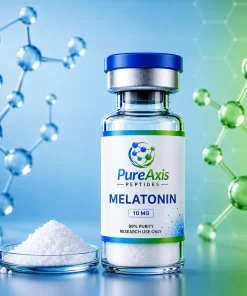

 Oxytocin Acetate
Price range: $40.00 through $68.00
Oxytocin Acetate
Price range: $40.00 through $68.00
Reviews
There are no reviews yet.