


Quick Specifications
| Purity (%) | 98.9 |
|---|
Cagrilintide 5mg + Semaglutide 5mg Blend — SEO Product Content
SEO Title
Cagrilintide 5mg + Semaglutide 5mg Blend | CagriSema Research
SEO Meta Description
Cagrilintide 5mg + Semaglutide 5mg research blend for laboratory studies of GLP-1, amylin signaling, appetite regulation and metabolic research.
Suggested URL Slug
/product/cagrilintide-5mg-semaglutide-5mg-blend/
Cagrilintide 5mg + Semaglutide 5mg Blend
Cagrilintide 5mg + Semaglutide 5mg Research Blend
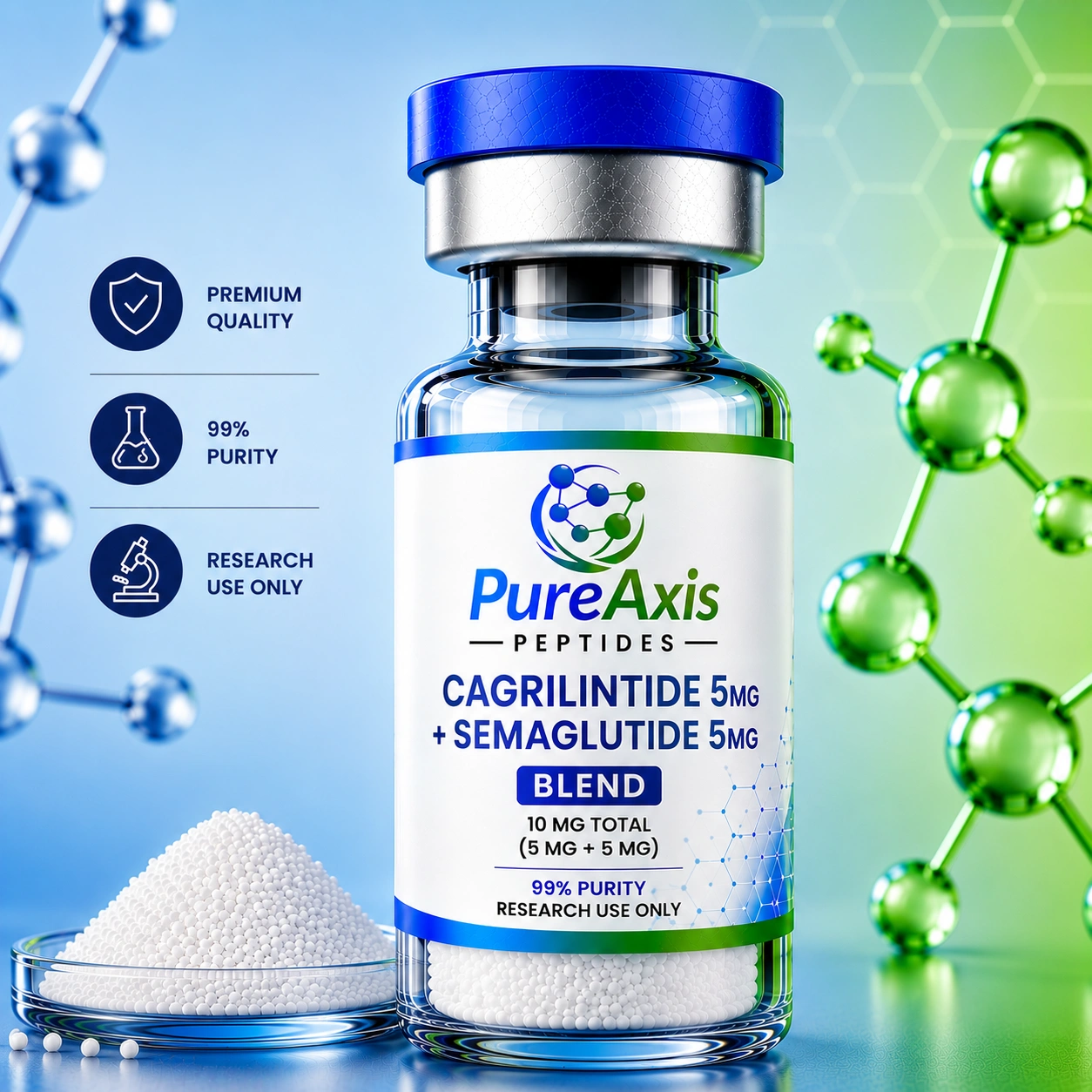
Cagrilintide 5mg + Semaglutide 5mg Blend combines two distinct metabolic research compounds associated with complementary pathways involved in energy balance, appetite regulation, glucose metabolism and body-weight regulation.
Each vial contains:
- Cagrilintide — 5mg
- Semaglutide — 5mg
- Total peptide content — 10mg
Cagrilintide is a long-acting amylin analogue, while semaglutide is a GLP-1 receptor agonist. The combination of these two mechanisms has been investigated clinically as CagriSema.
Pure Axis Peptides offers this formulation strictly as research material for qualified laboratory and scientific investigations.
What Is the Cagrilintide + Semaglutide Blend?
The Cagrilintide + Semaglutide blend contains equal quantities of:
Cagrilintide — 5mg
Semaglutide — 5mg
Total — 10mg
The two compounds act through different biological pathways.
Cagrilintide
→ Long-acting amylin analogue
Semaglutide
→ GLP-1 receptor agonist
The combination is therefore relevant to experimental studies examining interactions between amylin and GLP-1 signaling.
The 5mg + 5mg quantity is a product specification, not a recommended human dose or treatment protocol.
What Is Cagrilintide?
Cagrilintide is a long-acting synthetic analogue of amylin, a peptide hormone co-secreted with insulin by pancreatic beta cells.
Amylin participates in several physiological processes related to:
- Satiety
- Food intake
- Gastric emptying
- Postprandial glucose regulation
- Energy balance
Cagrilintide has been investigated as a long-acting amylin analogue for metabolic and obesity research.
Its mechanism provides a complementary pathway to GLP-1 receptor activation.
What Is Semaglutide?
Semaglutide is a long-acting GLP-1 receptor agonist.
GLP-1 is an incretin hormone involved in glucose-dependent insulin secretion and regulation of appetite and energy intake.
Semaglutide research has examined:
- GLP-1 receptor signaling
- Glucose metabolism
- Insulin secretion
- Appetite regulation
- Gastric emptying
- Energy balance
- Body-weight regulation
Semaglutide is also an established pharmaceutical ingredient in approved medicines. The regulatory status of approved semaglutide products should be distinguished from research-grade material sold for laboratory purposes.
Cagrilintide and Amylin Research
Amylin is a pancreatic peptide hormone involved in postprandial metabolic regulation.
Amylin signaling has been associated with:
- Reduced food intake
- Increased satiety
- Delayed gastric emptying
- Regulation of postprandial glucose
- Energy balance
Cagrilintide was developed to provide longer-lasting amylin-receptor pathway activity.
This makes cagrilintide relevant to laboratory research involving:
- Amylin receptor biology
- Appetite signaling
- Satiety pathways
- Energy homeostasis
- Metabolic regulation
Semaglutide and GLP-1 Research
Semaglutide activates the GLP-1 receptor, a G-protein-coupled receptor expressed in tissues involved in glucose and metabolic regulation.
GLP-1 receptor signaling can influence:
- Insulin secretion
- Glucagon regulation
- Gastric emptying
- Appetite
- Energy intake
- Glucose homeostasis
This makes semaglutide an important experimental tool for investigating the GLP-1 pathway.
Cagrilintide + Semaglutide: Complementary Mechanisms
The central research rationale for combining the two compounds is their different mechanisms.
Cagrilintide
Amylin analogue → amylin-related signaling → satiety and energy-balance pathways
Semaglutide
GLP-1 receptor agonist → GLP-1R signaling → glucose and appetite pathways
The combination can therefore be investigated as a model of dual metabolic signaling.
This distinction is important for SEO because searches for “CagriSema,” “cagrilintide semaglutide,” “amylin GLP-1 combination,” and “cagrilintide research” are closely related but should not be treated as identical products.
Cagrilintide + Semaglutide and CagriSema Research
The combination of cagrilintide and semaglutide has been studied clinically under the name CagriSema.
In the phase 3 REDEFINE 1 trial, adults with overweight or obesity received cagrilintide 2.4mg plus semaglutide 2.4mg, semaglutide alone, cagrilintide alone or placebo for 68 weeks.
The combination produced a significantly greater reduction in body weight than placebo. The estimated mean change was −20.4% with cagrilintide–semaglutide versus −3.0% with placebo under the trial’s treatment-policy estimand.
These results provide important scientific context for the combination.
However, the study formulation was 2.4mg + 2.4mg, not the 5mg + 5mg research formulation offered on this product page.
Cagrilintide + Semaglutide and Weight-Loss Research
Weight regulation is influenced by multiple interacting biological systems.
Research into cagrilintide and semaglutide has examined how simultaneous activation of amylin and GLP-1 pathways can influence:
- Food intake
- Satiety
- Energy intake
- Body weight
- Glucose metabolism
- Metabolic homeostasis
The REDEFINE 1 phase 3 trial demonstrated substantial weight reduction with the studied CagriSema regimen compared with placebo.
For accurate scientific marketing, those results should be described as clinical trial evidence for the studied CagriSema regimen, not as evidence that every cagrilintide/semaglutide formulation produces the same results.
Cagrilintide + Semaglutide and Appetite Research
Appetite regulation involves multiple hormonal and neural pathways.
Semaglutide activates GLP-1 receptors, while cagrilintide provides amylin-pathway activity.
Research can therefore examine:
- Satiety signaling
- Food intake
- Meal size
- Energy intake
- Appetite-related signaling
- Neuroendocrine regulation
The complementary nature of these pathways is a major area of interest in modern metabolic research.
Cagrilintide + Semaglutide and Energy Balance
Energy balance is determined by the relationship between:
Energy intake ↔ Energy expenditure
Hormonal signals from the gastrointestinal tract and pancreas contribute to regulation of food intake and metabolic activity.
Cagrilintide and semaglutide provide experimental tools for studying two different hormonal pathways influencing this system.
Potential research endpoints include:
- Food consumption
- Body weight
- Energy intake
- Glucose concentrations
- Insulin
- Glucagon
- Metabolic markers
Cagrilintide + Semaglutide and Glucose Research
Semaglutide’s GLP-1 receptor activity is directly relevant to glucose regulation.
Cagrilintide’s amylin-related activity also has relevance to postprandial glucose physiology.
Together, the compounds provide a research model for investigating:
- Glucose tolerance
- Insulin secretion
- Glucagon signaling
- Postprandial glucose
- Pancreatic endocrine function
- Metabolic homeostasis
REDEFINE 2 also evaluated the combination in adults with obesity and type 2 diabetes. The 68-week trial reported significantly greater weight reduction with cagrilintide–semaglutide than placebo.
Cagrilintide + Semaglutide and Insulin Research
GLP-1 signaling is closely connected to glucose-dependent insulin secretion.
Experimental studies can investigate how semaglutide affects:
- Insulin secretion
- Glucose tolerance
- Pancreatic beta-cell signaling
- Postprandial metabolism
Cagrilintide adds a complementary amylin-related pathway.
This makes the blend relevant to laboratory research into pancreatic endocrine signaling.
Cagrilintide + Semaglutide and Glucagon Research
Glucagon plays a central role in glucose homeostasis.
GLP-1 signaling and amylin signaling can influence glucagon dynamics in different physiological contexts.
Research involving the combination may therefore examine:
- Glucagon concentrations
- Glucose regulation
- Hepatic glucose production
- Postprandial endocrine responses
Cagrilintide + Semaglutide and Gastric Emptying
Gastric emptying influences nutrient delivery to the intestine and subsequent postprandial glucose responses.
Both amylin-related and GLP-1-related pathways have been studied in connection with gastric motility.
This makes gastric-emptying research another potential experimental application.
Possible endpoints include:
- Gastric emptying rate
- Postprandial glucose
- Satiety duration
- Nutrient absorption
- Gastrointestinal signaling
Cagrilintide + Semaglutide and Metabolic Research
The blend can be positioned within a broad metabolic research category.
Potential research areas include:
- Obesity biology
- Energy homeostasis
- Appetite regulation
- Glucose metabolism
- Insulin signaling
- Glucagon biology
- Pancreatic endocrine function
- Gastrointestinal physiology
- Amylin signaling
- GLP-1 receptor signaling
Cagrilintide + Semaglutide vs. Semaglutide Alone
Semaglutide Alone
Provides an experimental model focused primarily on GLP-1 receptor signaling.
Cagrilintide + Semaglutide
Adds an amylin-related signaling component to the GLP-1 pathway.
Clinical research has directly compared the combination with semaglutide alone as part of the REDEFINE 1 study design.
This makes comparative research particularly relevant to the product.
Cagrilintide + Semaglutide vs. Cagrilintide Alone
Cagrilintide Alone
Provides an experimental model focused on amylin-related signaling.
Cagrilintide + Semaglutide
Combines amylin-related and GLP-1-related pathways.
The REDEFINE 1 trial included both cagrilintide and semaglutide monotherapy comparator groups, providing a useful clinical research framework for understanding the combination.
Cagrilintide + Semaglutide vs. Tirzepatide
Tirzepatide and CagriSema represent different approaches to metabolic signaling.
Cagrilintide + Semaglutide
Amylin analogue + GLP-1 receptor agonist
Tirzepatide
GIP receptor agonism + GLP-1 receptor agonism
These differences make the compounds interesting subjects for comparative metabolic research.
In REDEFINE 4, CagriSema 2.4mg/2.4mg was compared directly with tirzepatide 15mg. The trial did not meet its primary non-inferiority endpoint, although CagriSema produced substantial weight reduction.
Explore Tirzepatide for related incretin research.
Cagrilintide + Semaglutide vs. Retatrutide
Retatrutide is an investigational multi-receptor agonist involving:
- GLP-1
- GIP
- Glucagon
Cagrilintide + semaglutide instead combines:
- Amylin
- GLP-1
This makes them useful comparative subjects for research into different approaches to metabolic signaling.
Explore Retatrutide for related metabolic research.
Cagrilintide + Semaglutide vs. Mazdutide
Mazdutide is another investigational metabolic peptide targeting multiple endocrine pathways.
Comparative research can examine differences in:
- Receptor targets
- Appetite regulation
- Glucose metabolism
- Energy balance
- Body-weight response
Explore Mazdutide for related metabolic research.
Cagrilintide + Semaglutide vs. Survodutide
Survodutide is an investigational dual agonist targeting GLP-1 and glucagon receptors.
The mechanism differs from CagriSema:
CagriSema → amylin + GLP-1
Survodutide → GLP-1 + glucagon
This makes both products relevant to comparative metabolic pharmacology.
Explore Survodutide for related research.
Cagrilintide + Semaglutide Research Applications
The blend may be relevant to laboratory studies involving:
Metabolic Research: Investigating endocrine control of energy balance.
GLP-1 Research: Studying GLP-1 receptor signaling.
Amylin Research: Investigating amylin-related pathways.
Appetite Research: Studying satiety and food-intake regulation.
Obesity Research: Investigating biological mechanisms associated with body-weight regulation.
Glucose Research: Studying glucose homeostasis.
Insulin Research: Investigating pancreatic beta-cell signaling.
Glucagon Research: Studying endocrine regulation of glucose metabolism.
Gastrointestinal Research: Investigating gastric-emptying pathways.
Energy-Balance Research: Studying hormonal regulation of energy intake.
Receptor Pharmacology: Comparing GLP-1 and amylin-related signaling.
Comparative Metabolic Research: Studying dual-pathway versus single-pathway approaches.
Cagrilintide 5mg + Semaglutide 5mg Formulation
Each vial contains:
Cagrilintide — 5mg
Semaglutide — 5mg
Total peptide content — 10mg
This 5mg + 5mg composition is a product specification, not a recommended human dosage.
It should not be presented as equivalent to the 2.4mg + 2.4mg CagriSema regimen studied in phase 3 trials.
Researchers should document the exact formulation, batch number, purity, analytical specifications and certificate of analysis used in an experiment.
Cagrilintide + Semaglutide Research Evidence
The cagrilintide–semaglutide combination has a considerably stronger clinical evidence base than many experimental peptide combinations.
REDEFINE 1 was a phase 3a, randomized, double-blind, placebo-controlled and active-controlled study involving more than 3,400 adults with overweight or obesity without diabetes. The studied 2.4mg/2.4mg combination produced a mean estimated body-weight change of −20.4% at week 68 under the treatment-policy estimand.
REDEFINE 2 studied adults with obesity and type 2 diabetes and likewise found significantly greater weight reduction with the 2.4mg/2.4mg combination than placebo.
However, those findings should not be directly attributed to the 5mg + 5mg Pure Axis research formulation.
Regulatory Considerations
Semaglutide has FDA-approved pharmaceutical products, including Wegovy, Ozempic and Rybelsus in specific indications and formulations. FDA records show continued updates to approved semaglutide products in 2026.
Cagrilintide, by contrast, remains subject to a different regulatory status. FDA states that cagrilintide is not a component of an FDA-approved drug and cannot be used in compounding under federal law.
Accordingly, a research product containing both compounds should not be marketed as an FDA-approved CagriSema product.
Analytical Considerations
Because this formulation contains two active peptide ingredients, researchers should verify:
- Cagrilintide identity
- Semaglutide identity
- Individual purity
- Total peptide content
- Formulation characteristics
- Batch number
- Storage conditions
- Certificate of analysis
For research reproducibility, the exact composition and analytical documentation should be recorded.
Explore Related Research
The Cagrilintide + Semaglutide Blend fits naturally within Pure Axis Peptides’ metabolic peptide research cluster.
Explore Cagrilintide for individual amylin-analogue research.
Explore Semaglutide for individual GLP-1 receptor research.
Explore Tirzepatide for GIP/GLP-1 receptor research.
Explore Retatrutide for multi-receptor metabolic research.
Explore Survodutide for GLP-1/glucagon research.
Explore Mazdutide for related metabolic research.
Explore Cagrilintide and Semaglutide when comparing the individual components of the blend.
Browse the Peptides collection for additional research materials.
Visit Shop All Products for the complete Pure Axis Peptides catalog.
Research Use Only
Cagrilintide 5mg + Semaglutide 5mg Blend supplied by Pure Axis Peptides is intended strictly for laboratory and scientific research. It is not intended for human consumption, self-administration, diagnosis, treatment, cure, or prevention of any disease or medical condition. Cagrilintide and semaglutide are biologically active metabolic compounds, and regulatory status differs between the two ingredients. Published clinical trials of CagriSema used specific formulations and dosing regimens that should not be assumed to apply to this 5mg + 5mg research formulation. Researchers should evaluate all materials according to their experimental requirements, product documentation, applicable regulations and laboratory procedures.
Internal Linking Recommendations
Primary Internal Links
- Cagrilintide →
https://pureaxispeptides.com/product/cagrilintide/ - Semaglutide →
https://pureaxispeptides.com/product/semaglutide/ - Tirzepatide →
https://pureaxispeptides.com/product/tirzepatide/ - Retatrutide →
https://pureaxispeptides.com/product/retatrutide/ - Survodutide →
https://pureaxispeptides.com/product/survodutide/ - Mazdutide →
https://pureaxispeptides.com/product/mazdutide/ - Peptides →
https://pureaxispeptides.com/product-category/peptides/ - Shop All Products →
https://pureaxispeptides.com/shop/
Verify the exact live WooCommerce URLs before publishing.
Recommended Internal-Link Anchors
Use varied contextual anchors:
- “Cagrilintide 5mg + Semaglutide 5mg blend”
- “Cagrilintide semaglutide research blend”
- “CagriSema research”
- “cagrilintide research”
- “semaglutide research”
- “amylin and GLP-1 research”
- “dual metabolic research”
- “GLP-1 receptor research”
- “amylin analogue research”
- “metabolic peptide research”
- “appetite regulation research”
- “energy-balance research”
- “GLP-1 and amylin signaling”
Recommended Site Architecture
Build a dedicated metabolic peptide cluster:
Cagrilintide + Semaglutide Blend
→ Cagrilintide
→ Semaglutide
→ Tirzepatide
→ Retatrutide
→ Survodutide
→ Mazdutide
→ GLP-1
→ Amylin
→ Appetite regulation
→ Glucose metabolism
→ Energy balance
→ Metabolic research
Recommended Supporting Articles
“Cagrilintide vs Semaglutide: Understanding Amylin and GLP-1 Signaling”
“Cagrilintide + Semaglutide: What Is CagriSema?”
“CagriSema vs Tirzepatide: Comparing Different Metabolic Signaling Pathways”
“Cagrilintide vs Semaglutide vs Tirzepatide: A Research Overview”
“Amylin and GLP-1: Understanding Dual-Pathway Metabolic Research”
These articles can capture informational search traffic while directing relevant topical authority back to the individual products and the combination page.
External Scientific References
- NEJM — Coadministered Cagrilintide and Semaglutide in Adults with Overweight or Obesity
- NEJM — Cagrilintide–Semaglutide in Adults with Obesity and Type 2 Diabetes
- FDA — Concerns With Unapproved GLP-1 Drugs
- FDA — Higher-Dose Semaglutide Approval
- Novo Nordisk — CagriSema FDA Submission
- Novo Nordisk — REDEFINE 4 CagriSema Results
Product Tags
Cagrilintide Semaglutide Blend, Cagrilintide 5mg, Semaglutide 5mg, Cagrilintide 5mg Semaglutide 5mg, Cagrilintide + Semaglutide, Cagrilintide Semaglutide Research, CagriSema, CagriSema Research, Cagrilintide Research, Semaglutide Research, Cagrilintide Research Material, Semaglutide Research Material, Amylin Analogue, Amylin Research, GLP-1 Research, GLP-1 Receptor Agonist Research, GLP-1 Research Peptide, Amylin GLP-1 Combination, Metabolic Peptide, Metabolic Research, Metabolic Peptide Blend, Appetite Research, Appetite Regulation Research, Satiety Research, Energy Balance Research, Weight Regulation Research, Obesity Research, Glucose Metabolism Research, Insulin Research, Glucagon Research, Gastric Emptying Research, Endocrine Research, Metabolic Signaling, GLP-1 Amylin Research, Research Peptide Blend, Experimental Peptide, Laboratory Research
| Purity (%) | 98.9 |
|---|---|
| Lab Tested | yes |
| Research Grade | yes |
| Third Party Tested | yes |
Be the first to review “Cagrilintide 5mg + Semaglutide 5mg Blend”
Need Assistance?
Our research specialists are here to help with product selection and technical questions.
Related products
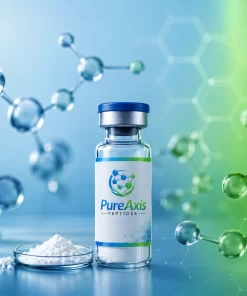
Blends
BlendsBPC-157 10mg + TB-500 10mg Blend
$214.00High-dose dual peptide healing blend for advanced research

GLP-1 & Metabolic
GLP-1 & Metabolic $195.00Dual GLP-1/glucagon agonist for next-generation metabolic research

GLP-1 & Metabolic
GLP-1 & Metabolic Price range: $95.00 through $380.00Triple agonist peptide for advanced metabolic research

GLP-1 & Metabolic
GLP-1 & Metabolic Price range: $46.00 through $131.00Long-acting GLP-1 receptor agonist for metabolic research

GLP-1 & Metabolic
GLP-1 & Metabolic Price range: $49.00 through $244.00Dual GIP/GLP-1 receptor agonist for advanced metabolic research

Blends
BlendsGlow Blend (TB-500 10mg + BPC-157 10mg + GHK-Cu 50mg)
$231.00Triple peptide regeneration blend for healing research

Blends
BlendsBPC-157 5mg + TB-500 5mg Blend
$110.00Dual peptide healing blend for synergistic tissue repair research
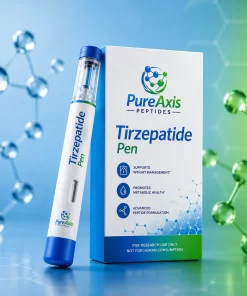
GLP-1 & Metabolic
GLP-1 & Metabolic Price range: $37.00 through $73.00Pre-filled tirzepatide pen for convenient research dosing
 Cagrilintide 5mg + Semaglutide 5mg Blend
$176.00
Cagrilintide 5mg + Semaglutide 5mg Blend
$176.00
Reviews
There are no reviews yet.