
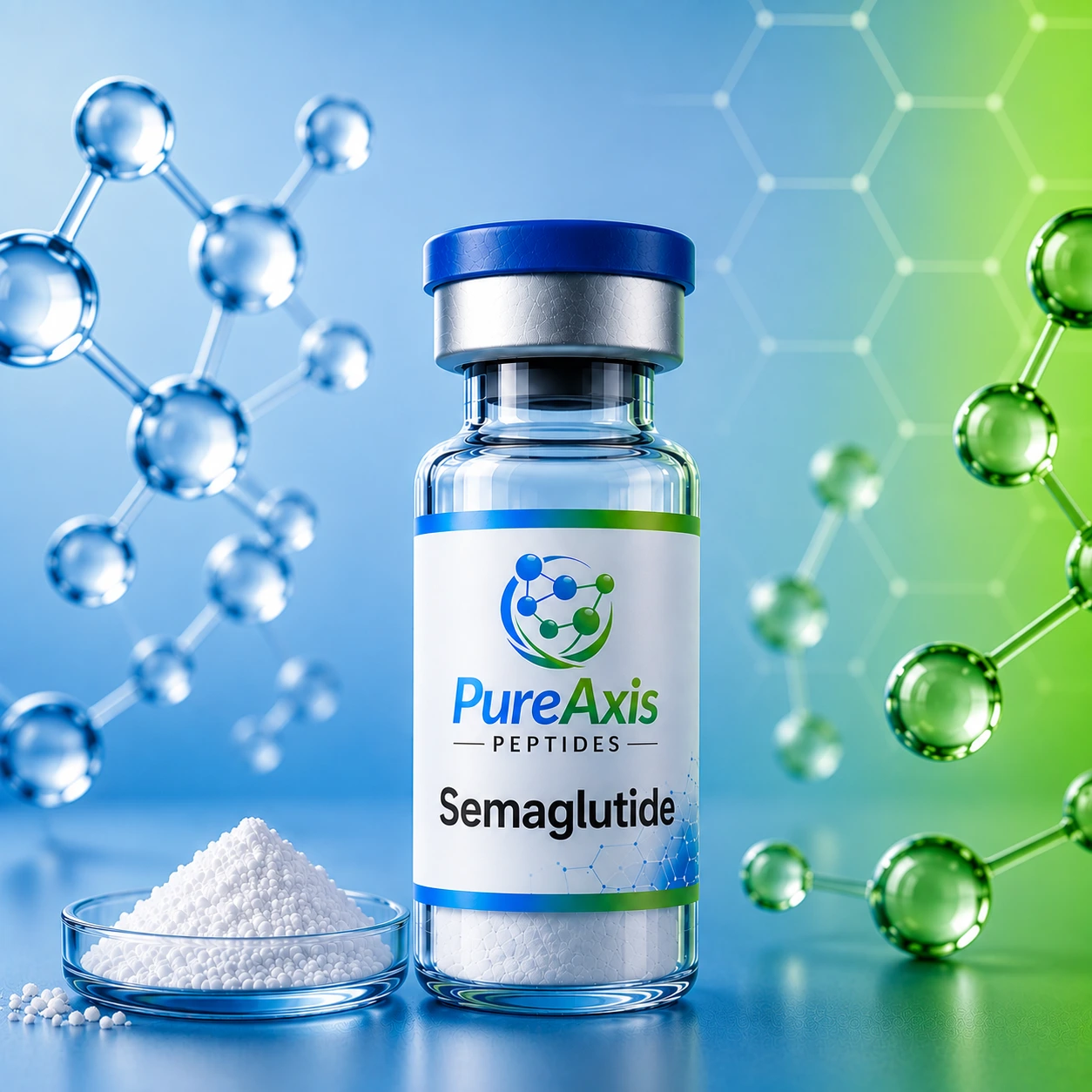



Quick Specifications
| Purity (%) | 98.9 |
|---|
Semaglutide Research Peptide
Semaglutide is a long-acting glucagon-like peptide-1 receptor (GLP-1R) agonist extensively studied in metabolic and endocrine research. As a GLP-1 analogue with high sequence similarity to native human GLP-1, semaglutide provides researchers with an important experimental tool for investigating glucose regulation, appetite signaling, energy balance and GLP-1 receptor biology.
Pure Axis Peptides offers Semaglutide as a research-use peptide for qualified laboratory and scientific investigations.
What Is Semaglutide?
Semaglutide is a modified GLP-1 analogue designed to have substantially longer activity than native GLP-1. It selectively binds to and activates the GLP-1 receptor, a receptor involved in metabolic regulation and appetite-related signaling.
Its long-acting properties have made semaglutide a major subject of research involving metabolic signaling, glucose homeostasis, energy intake and central nervous system pathways.
Semaglutide and GLP-1 Receptor Research
The GLP-1 receptor is expressed in multiple tissues and cell populations involved in metabolic regulation. Activation of GLP-1 receptors can influence pancreatic hormone secretion, gastrointestinal function and neural pathways involved in appetite and food intake.
Semaglutide research commonly focuses on:
- GLP-1 receptor signaling
- Glucose homeostasis
- Insulin secretion
- Glucagon regulation
- Appetite and food-intake pathways
- Energy balance
- Gastric-emptying research
- Metabolic signaling
- Endocrine research
- Obesity and metabolic-disease models
FDA pharmacology information describes semaglutide as a GLP-1 receptor agonist that stimulates insulin secretion and reduces glucagon secretion in a glucose-dependent manner, while also delaying gastric emptying.
Semaglutide and Metabolic Research
Semaglutide has become an important experimental compound for investigating the relationship between GLP-1 signaling and metabolic physiology.
Research has examined how GLP-1 receptor activation affects food intake and appetite through neural pathways. Experimental studies have identified brain regions involved in semaglutide-associated changes in food intake and body weight.
More recent mechanistic research has examined intracellular signaling in GLP-1 receptor-expressing neurons, identifying roles for cAMP and calcium-related signaling in semaglutide’s effects on neural circuits associated with energy balance.
Semaglutide Research Applications
Semaglutide may be relevant to laboratory studies involving:
GLP-1 Receptor Biology: Investigating receptor activation, signaling pathways and downstream cellular responses.
Metabolic Research: Studying glucose homeostasis, energy balance and metabolic regulation.
Endocrine Research: Examining GLP-1-dependent pancreatic signaling and hormone regulation.
Neuroscience: Investigating neural pathways involved in appetite, satiety and food-intake regulation.
Pharmacology: Studying the properties and biological activity of long-acting GLP-1 receptor agonists.
Obesity Research: Using experimental models to investigate mechanisms linking GLP-1 signaling, appetite and energy intake.
Semaglutide and Appetite Signaling
One of the major areas of semaglutide research involves its effects on appetite and caloric intake. GLP-1 receptors are present in brain regions associated with appetite regulation, and semaglutide can activate neural pathways involved in food-intake control.
Research published in 2026 further characterized semaglutide signaling in hindbrain GLP-1 receptor-expressing neurons, reporting that cAMP-dependent signaling contributes to semaglutide-associated changes in body weight in experimental models.
Semaglutide and Glucose Regulation
GLP-1 receptor activation is closely associated with glucose-dependent pancreatic signaling. Semaglutide has been investigated for its ability to enhance glucose-dependent insulin secretion while reducing glucagon secretion, making it an important compound for studies of glucose metabolism and endocrine signaling.
Researchers studying GLP-1 biology can therefore use semaglutide to investigate interactions between receptor activation, pancreatic signaling, glucose levels and broader metabolic pathways.
Long-Acting GLP-1 Research
Compared with native GLP-1, semaglutide has been engineered for prolonged activity. This pharmacological profile makes it particularly useful in research comparing short-acting and long-acting GLP-1 receptor agonists.
The compound’s extended activity is one reason semaglutide has become an important reference molecule in the development and study of GLP-1-based metabolic therapies.
Explore Related Metabolic Research Peptides
Semaglutide is part of the Pure Axis Peptides GLP-1 & Metabolic Peptides collection.
Researchers interested in combination metabolic research can also explore the Cagrilintide + Semaglutide Blend listed in the catalog.
For additional peptide research materials, visit the Peptides collection.
Browse Research Chemicals or Shop All Products for the wider Pure Axis Peptides catalog.
Research Use Only
Semaglutide supplied by Pure Axis Peptides is intended strictly for laboratory and scientific research. It is not intended for human consumption, self-administration, diagnosis, treatment, cure, or prevention of any disease or medical condition. Researchers should evaluate all materials against their experimental requirements, product documentation and applicable laboratory procedures.
Internal Linking Recommendations
Primary Internal Links
- GLP-1 & Metabolic Peptides →
https://pureaxispeptides.com/product-category/peptides/glp-1-metabolic/ - Cagrilintide + Semaglutide Blend →
https://pureaxispeptides.com/product/cagrilintide-5mg-semaglutide-5mg-blend/ - Peptides →
https://pureaxispeptides.com/product-category/peptides/ - Research Chemicals →
https://pureaxispeptides.com/product-category/research-chemicals/ - Shop All Products →
https://pureaxispeptides.com/shop/
Verify the exact live WooCommerce URLs before publishing; category/product slugs can differ from the CSV structure.
External Scientific References
- FDA — Current Wegovy prescribing information and mechanism of action:
https://www.accessdata.fda.gov/drugsatfda_docs/label/2026/215256s033lbl.pdf - PubMed — Semaglutide and GLP-1 receptor signaling:
https://pubmed.ncbi.nlm.nih.gov/39728000/ - PubMed — Semaglutide and neural pathways regulating body weight:
https://pubmed.ncbi.nlm.nih.gov/32213703/ - PubMed — 2026 semaglutide/cAMP signaling research:
https://pubmed.ncbi.nlm.nih.gov/42174184/ - PubMed — GLP-1 receptor agonist appetite and energy regulation:
https://pubmed.ncbi.nlm.nih.gov/39892489/
Product Tags
Semaglutide, Semaglutide Peptide, Semaglutide Research Peptide, Semaglutide Research, GLP-1, GLP-1 Peptide, GLP-1 Receptor Agonist, GLP-1 Research, GLP-1R, Metabolic Peptide, Metabolic Research, Metabolic Research Peptide, Endocrine Research, Glucose Research, Glucose Regulation, Appetite Research, Energy Balance, Weight Regulation Research, GLP-1 Signaling, Peptide Research, Laboratory Research, Research Peptide
| Purity (%) | 98.9 |
|---|---|
| Lab Tested | yes |
| Research Grade | yes |
| Third Party Tested | yes |
| Strength | 10mg, 15mg, 20mg, 30mg, 5mg |
|---|---|
| Volume | 10 vials |
Be the first to review “Semaglutide”
Need Assistance?
Our research specialists are here to help with product selection and technical questions.
Related products

GLP-1 & Metabolic
GLP-1 & Metabolic Price range: $49.00 through $244.00Dual GIP/GLP-1 receptor agonist for advanced metabolic research
GLP-1 & Metabolic
GLP-1 & Metabolic $326.00Dual GLP-1/glucagon agonist for metabolic and liver research

Blends
BlendsCagrilintide 5mg + Semaglutide 5mg Blend
$176.00Dual metabolic peptide blend for weight management research
GLP-1 & Metabolic
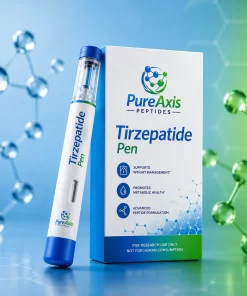
GLP-1 & Metabolic Price range: $37.00 through $73.00Pre-filled tirzepatide pen for convenient research dosing

GLP-1 & Metabolic
GLP-1 & Metabolic Price range: $95.00 through $380.00Triple agonist peptide for advanced metabolic research

GLP-1 & Metabolic
GLP-1 & Metabolic Price range: $122.00 through $244.00Long-acting amylin analog for metabolic research

 Semaglutide
Price range: $46.00 through $131.00
Semaglutide
Price range: $46.00 through $131.00
Reviews
There are no reviews yet.