
Quick Specifications
| Purity (%) | 98.9 |
|---|
Glutathione — SEO Product Content
SEO Title
Glutathione Peptide | Antioxidant & Cellular Health Research
SEO Meta Description
Glutathione research compound for laboratory studies of redox homeostasis, oxidative stress, antioxidant pathways, cellular protection and glutathione metabolism.
Suggested URL Slug
/product/glutathione/
SEO Product Description
Glutathione Research Compound
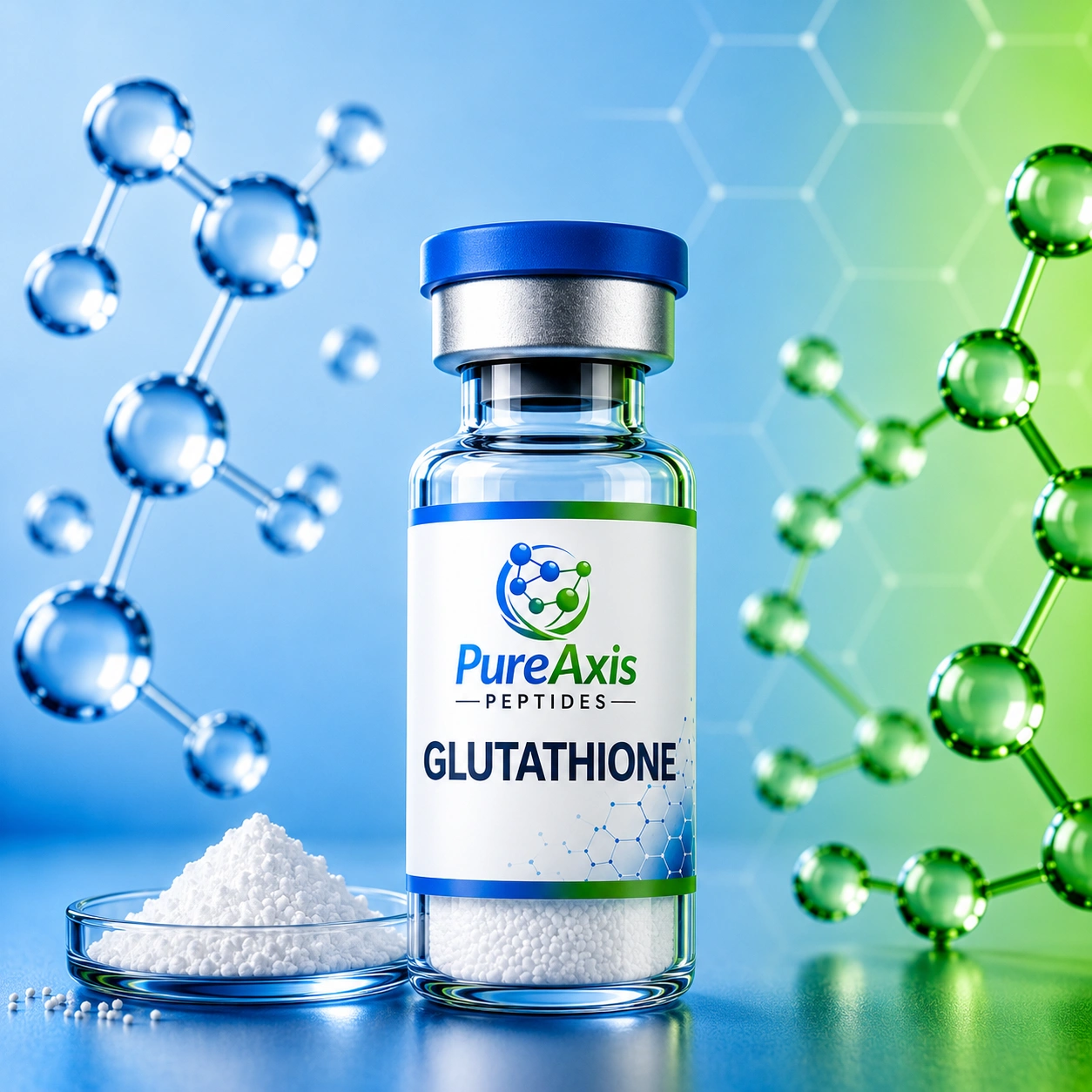
Glutathione (GSH) is a naturally occurring tripeptide composed of glutamate, cysteine and glycine. It is one of the most important intracellular molecules involved in maintaining cellular redox balance and protecting biological systems from oxidative stress.
Pure Axis Peptides offers Glutathione as a research-use compound for qualified laboratory and scientific investigations involving antioxidant biology, redox signaling, cellular metabolism and glutathione-dependent biochemical pathways.
What Is Glutathione?
Glutathione, chemically known as γ-glutamyl-cysteinyl-glycine, is a small thiol-containing peptide synthesized naturally within cells.
The molecule exists primarily in two forms:
- Reduced glutathione (GSH)
- Oxidized glutathione (GSSG)
The relationship between GSH and GSSG is an important indicator of cellular redox status. The GSH/GSSG couple is one of the major redox systems used by cells to maintain an appropriate oxidative environment.
This makes glutathione an important experimental molecule for research involving oxidative stress, cellular signaling and metabolic regulation.
Glutathione and Antioxidant Research
Glutathione is central to several antioxidant defense systems.
Glutathione-dependent enzymes, including glutathione peroxidases and glutathione S-transferases, use GSH in biochemical reactions that help cells manage reactive oxygen species and electrophilic compounds.
Glutathione also participates in the regeneration and recycling of other antioxidant systems. Its biological functions extend beyond simple antioxidant activity and include protein redox regulation, cellular signaling, apoptosis and ferroptosis.
This makes GSH particularly valuable for experimental research into:
- Oxidative stress
- Redox homeostasis
- Reactive oxygen species
- Antioxidant signaling
- Cellular defense mechanisms
- Protein oxidation
- Lipid peroxidation
- Mitochondrial biology
- Cellular stress responses
Glutathione and Redox Homeostasis
Redox homeostasis describes the balance between oxidizing and reducing processes within cells.
The GSH/GSSG system is an important component of this balance. Changes in the ratio between reduced and oxidized glutathione can provide researchers with information about the oxidative environment of cells and tissues.
Consequently, measuring glutathione and related metabolites is common in experimental models investigating oxidative stress and cellular damage.
Glutathione and Glutathione Peroxidase
Glutathione serves as an electron donor for glutathione peroxidase reactions.
These enzymes help reduce hydrogen peroxide and lipid hydroperoxides, with GSH being converted to GSSG during the process. Glutathione reductase can subsequently participate in regenerating reduced glutathione.
This interconnected system provides an important experimental model for studying how cells respond to oxidative challenges.
Glutathione and Glutathione S-Transferases
Glutathione also participates in reactions catalyzed by glutathione S-transferases (GSTs).
GST enzymes conjugate glutathione with a range of electrophilic compounds, contributing to cellular handling and metabolism of reactive molecules.
This pathway makes glutathione relevant to research involving:
- Xenobiotic metabolism
- Electrophile detoxification
- Drug-metabolism research
- Cellular defense
- Oxidative stress
- Environmental toxicology
- Biochemical metabolism
Glutathione and Cellular Protection
Glutathione is involved in protecting proteins and other cellular components from excessive oxidation.
Research has demonstrated roles for GSH in maintaining protein thiol groups, regulating redox-sensitive signaling and influencing processes such as apoptosis and ferroptosis.
These mechanisms make glutathione useful for researchers investigating how cells respond to metabolic, oxidative and environmental stress.
Glutathione and Mitochondrial Research
Mitochondria are major sites of cellular energy production and are also important sources and targets of reactive oxygen species.
Glutathione-dependent redox systems therefore have significant relevance to mitochondrial biology. Researchers can examine GSH/GSSG status alongside mitochondrial function, oxidative damage and cellular energy metabolism.
This creates opportunities for experimental research involving:
- Mitochondrial oxidative stress
- Cellular respiration
- Reactive oxygen species
- Mitochondrial redox balance
- Metabolic stress
- Cellular aging
Glutathione and Skin Research
Glutathione has also attracted significant interest in skin and cosmetic research.
Recent systematic-review literature has examined glutathione in relation to redox regulation, melanogenesis, skin aging, tissue repair and oxidative-stress pathways. The review found research interest across topical, oral and injectable delivery approaches, while also emphasizing the need for standardized formulations and additional long-term safety research.
For a research product page, the most defensible positioning is therefore skin biology and redox research, rather than promising a specific cosmetic or pigmentation outcome.
Glutathione and Cellular Aging Research
Oxidative stress and redox imbalance are important areas of investigation within cellular-aging research.
Glutathione provides researchers with a measurable component of cellular redox biology that can be evaluated alongside oxidative-damage markers, antioxidant enzymes, mitochondrial function and inflammatory pathways.
This makes GSH relevant to experimental studies of:
- Cellular aging
- Oxidative stress
- Senescence
- Mitochondrial function
- Redox signaling
- Cellular resilience
However, research involving glutathione should not be presented as proof that supplementation or administration reverses aging or extends human lifespan.
Glutathione Research Applications
Glutathione may be relevant to laboratory research involving:
Redox Biology: Studying the GSH/GSSG redox couple and cellular reducing capacity.
Oxidative-Stress Research: Investigating reactive oxygen species and oxidative damage.
Antioxidant Research: Examining glutathione-dependent antioxidant enzymes.
Mitochondrial Research: Studying mitochondrial redox balance and oxidative stress.
Cellular Metabolism: Investigating glutathione synthesis, utilization and recycling.
Toxicology: Studying glutathione conjugation and cellular responses to electrophilic compounds.
Skin Biology: Investigating oxidative stress, melanogenesis and tissue-related pathways.
Cellular Aging: Examining relationships between redox status and age-associated cellular changes.
Glutathione Metabolism
Cellular glutathione levels are regulated through synthesis, utilization, oxidation and recycling.
The availability of cysteine, glutamate and glycine influences GSH synthesis, while enzymes such as glutathione reductase, glutathione peroxidases and glutathione S-transferases contribute to its ongoing metabolism and utilization.
This makes glutathione a useful research molecule for investigating how cells maintain redox balance under changing metabolic conditions.
Glutathione Research Material
Researchers should verify the current Pure Axis Peptides product specification, formulation, concentration, storage requirements and batch-specific certificate of analysis (COA) before laboratory use.
For research involving glutathione, analytical verification is particularly useful because the reduced and oxidized forms have different chemical characteristics and biological roles.
Explore Related Research
Glutathione fits naturally within a broader cellular health, antioxidant and metabolic research cluster.
Explore the Peptides collection for additional peptide research materials.
Researchers interested in metabolic biology can also explore the Obesity & Metabolism collection.
For additional laboratory compounds, visit Research Chemicals.
Browse Shop All Products for the complete Pure Axis Peptides catalog.
Research Use Only
Glutathione supplied by Pure Axis Peptides is intended strictly for laboratory and scientific research. It is not intended for human consumption, self-administration, injection into humans or animals, diagnosis, treatment, cure, or prevention of any disease or medical condition. Research findings concerning glutathione biology should not be interpreted as establishing clinical efficacy for a particular formulation, route of administration or health outcome. Researchers should evaluate all materials according to their experimental requirements, product documentation and applicable laboratory procedures.
Internal Linking Recommendations
Primary Internal Links
- Peptides →
https://pureaxispeptides.com/product-category/peptides/ - Obesity & Metabolism →
https://pureaxispeptides.com/product-category/peptides/obesity-metabolism/ - Research Chemicals →
https://pureaxispeptides.com/product-category/research-chemicals/ - Shop All Products →
https://pureaxispeptides.com/shop/
Verify the live WooCommerce URLs before publishing.
Recommended SEO Anchor Text
Use contextual internal anchors such as:
- “cellular health research”
- “antioxidant research compounds”
- “oxidative-stress research”
- “metabolic research”
- “peptide research”
- “research chemicals”
These should point to relevant category or product pages rather than repeatedly using the exact-match keyword “glutathione.”
External Scientific References
- PubMed — The Antioxidant Glutathione:
https://pubmed.ncbi.nlm.nih.gov/36707132/ - NCBI Bookshelf — Glutathione Metabolism:
https://www.ncbi.nlm.nih.gov/books/NBK28123/ - PubMed — GSH/GSSG redox environment:
https://pubmed.ncbi.nlm.nih.gov/11368918/ - PubMed — Glutathione, skin aging and tissue regeneration:
https://pubmed.ncbi.nlm.nih.gov/41900080/
Product Tags
Glutathione, Glutathione Peptide, GSH, Reduced Glutathione, Glutathione Research, Glutathione Research Compound, Glutathione Peptide Research, Antioxidant Research, Antioxidant Peptide, Oxidative Stress Research, Oxidative Stress, Redox Biology, Redox Homeostasis, GSH GSSG, Glutathione Metabolism, Glutathione Peroxidase, Glutathione S Transferase, GST Research, Cellular Health, Cellular Protection, Mitochondrial Research, Mitochondrial Redox, Cellular Aging, Longevity Research, Skin Research, Skin Aging Research, Melanogenesis Research, Metabolic Research, Laboratory Research
| Purity (%) | 98.9 |
|---|---|
| Lab Tested | yes |
| Research Grade | yes |
| Third Party Tested | yes |
| Strength | 1500mg, 600mg |
|---|---|
| Volume | 10 vials |
Be the first to review “Glutathione”
Need Assistance?
Our research specialists are here to help with product selection and technical questions.
Related products
Longevity & Cellular Health
Longevity & Cellular Health Price range: $105.00 through $407.00Mitochondria-targeted peptide for cardiolipin and aging research

Longevity & Cellular Health
Longevity & Cellular Health $380.00Senolytic peptide for cellular senescence and aging research
Longevity & Cellular Health
Longevity & Cellular Health Price range: $54.00 through $176.00Essential coenzyme for cellular energy and longevity research

Longevity & Cellular Health
Longevity & Cellular Health Price range: $70.00 through $244.00Mitochondrial peptide for exercise mimetic and longevity research

Longevity & Cellular Health
Longevity & Cellular Health Price range: $38.00 through $176.00Tetrapeptide for telomerase activation and aging research
 Glutathione
Price range: $40.00 through $98.00
Glutathione
Price range: $40.00 through $98.00
Reviews
There are no reviews yet.